On June 9, 2026, the opening day of GILE brought a development that is more relevant to market access than to exhibition news alone: the launch of the GILE AI Lighting Ecosystem Alliance and its plan to build an interoperability testing platform for Matter over Thread and DALI-2 in AI lighting devices. With a certification label planned for Q3 2026 and positioned to help exporters meet smart home channel entry requirements in Europe and the United States more efficiently, the announcement deserves attention from lighting manufacturers, chip suppliers, export teams, certification-related service providers, and buyers managing technical compliance and delivery readiness.
What Was Announced at GILE on June 9
At the Guangzhou International Lighting Exhibition on June 9, 2026, the GILE AI Lighting Ecosystem Alliance was announced. The first group of members includes Huawei HarmonyOS, Tuya Smart, Opple, Debang, and multiple IoT driver chip manufacturers.
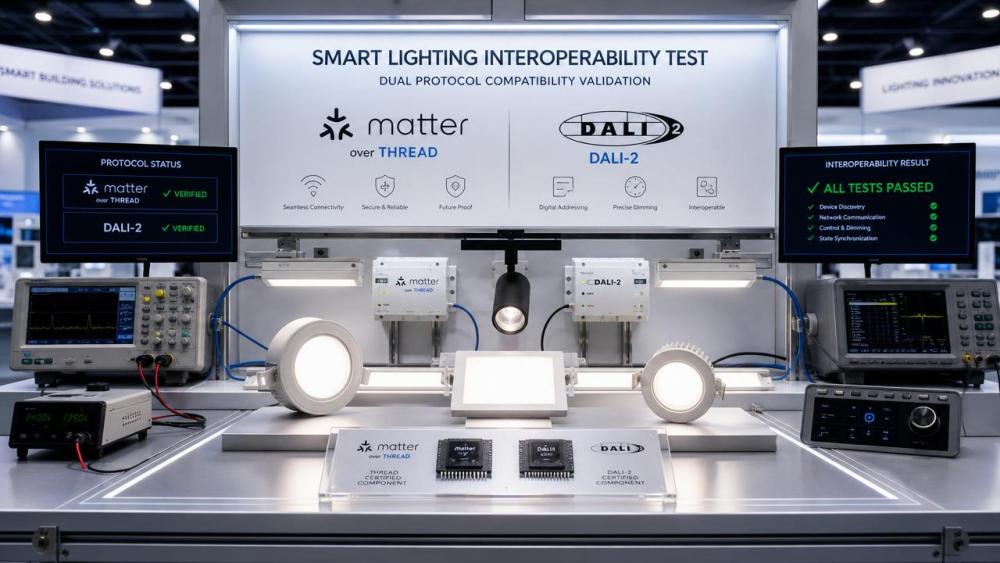
According to the event summary, the alliance will jointly build a bidirectional interoperability testing platform covering Matter over Thread and DALI-2 for AI lighting devices. It also plans to launch a certification label in Q3 2026.
The stated purpose of that certification label is to help export-oriented companies more quickly satisfy access requirements used by smart home channels in Europe and the United States.
Why This Matters Across the Supply Chain
Export programs may face a new pre-screening step
From an industry perspective, exporters may be affected first because the announcement directly links interoperability testing and a future certification label to channel access in overseas smart home markets. The practical impact may appear in product onboarding, customer qualification reviews, technical file preparation, and shipment scheduling where buyers increasingly ask for proof that devices can work across specified protocols.
What deserves closer attention is not only the future label itself, but also whether overseas channel partners begin to treat interoperability evidence as a front-end requirement in supplier selection, model approval, or launch timing.
Device makers may need closer protocol coordination
For lighting manufacturers and finished-device assemblers, the move points to tighter alignment between product design and compliance preparation. If products are expected to support both Matter over Thread and DALI-2 interoperability pathways, the effect may extend to firmware coordination, interface validation, technical documentation, and pre-delivery testing plans.
Analysis shows that manufacturers should watch whether product specifications, tender documents, or buyer checklists begin to reference interoperability outcomes more explicitly once the planned certification label is introduced.
Component and chip suppliers may be drawn into compliance evidence
IoT driver chip manufacturers and other upstream component suppliers may also be affected because interoperability claims at device level often require consistent technical support from underlying hardware and software layers. In business terms, this may influence supplier qualification, supporting test materials, version control, and traceability of protocol-related functions.
Observably, suppliers that support export-oriented lighting programs may need to prepare more structured technical evidence if downstream customers ask for clearer confirmation that a product can enter interoperability testing without redesign delays.
Testing and certification service links may become more visible
Certification-related companies, laboratories, and technical service providers may need to follow the alliance's later execution language closely. The announcement does not yet provide detailed testing procedures or document requirements, but it does indicate that interoperability verification may become more organized as a market access tool rather than remaining only a technical discussion.
For procurement teams and buyers, that could eventually affect vendor comparison, acceptance criteria, and after-sales support expectations where cross-protocol compatibility is commercially relevant.
What Companies Should Track Before Q3 2026
Watch the formal wording of the certification label
Analysis shows that the most immediate compliance question is how the planned Q3 2026 label will be defined in official terms. Companies should pay attention to whether the final wording focuses on interoperability testing, market access facilitation, channel recognition, or a narrower technical scope. That distinction can affect how firms present claims in product literature, declarations, and customer communications.
Review technical files and test-readiness now
Companies involved in export lighting programs may need to examine whether current technical files, protocol descriptions, test reports, and product specifications are sufficient for a future interoperability review. This is especially relevant where sales teams, engineering teams, and external certification partners work on different document versions.
Check whether procurement and delivery plans need adjustment
If customers begin asking about future compatibility with the planned label, procurement and production planning may need earlier coordination. What deserves closer attention is whether supplier qualification, sample approval, and delivery promises are being made before the alliance's testing and certification framework is fully clarified.
Prepare for after-sales and traceability questions
Where products are sold into smart home channels, interoperability expectations can continue after shipment. Companies should therefore watch whether customer service documents, software update processes, and quality traceability records need to reflect protocol-related consistency more clearly once the alliance's certification mechanism takes shape.
More a Market Signal Than a Fully Settled Rule
Observably, this announcement is best read as an execution signal rather than as a completed regulatory outcome. The key fact already on the table is that an industry alliance has been formed, a testing platform is planned, and a certification label is targeted for Q3 2026. However, the specific compliance pathway, recognition scope, and downstream adoption in trade and procurement documents have not been detailed in the provided information.
From an industry perspective, that means companies should neither ignore the development nor assume that every commercial requirement is already fixed. Continued attention is warranted because channel access conditions often become more concrete when certification wording, testing criteria, and buyer-side acceptance language begin to align.
How This Development Is Best Understood Now
At this stage, the GILE alliance announcement suggests that interoperability between Matter over Thread and DALI-2 is moving closer to a structured certification and channel-entry discussion in smart lighting exports. The practical importance lies less in a single exhibition announcement and more in the possibility that protocol interoperability could become a clearer screening item in overseas market access and procurement decisions.
It is more appropriate to understand this as a developing industry rule signal with near-term compliance implications, rather than as a fully finalized requirement. Companies tied to export lighting business should follow the next round of official language and market adoption closely before treating it as a settled standard in all transactions.
Basis of This Article and What Still Needs Verification
This article is generated based on the user-provided news title, event date, and event summary. The confirmed factual basis is limited to the June 9, 2026 GILE announcement of the GILE AI Lighting Ecosystem Alliance, the listed first members, the planned Matter over Thread and DALI-2 bidirectional interoperability testing platform, and the stated plan to launch a certification label in Q3 2026 for export market access support.
For developments of this kind, source types typically worth tracking include official event announcements, regulator publications, trade or customs authority information, industry association releases, standard organization documents, and reporting by authoritative industry media. A specific official source link was not provided in the input, so the exact official documentation still needs continued verification.
What remains to be observed includes the final certification language, execution criteria, recognition by channel buyers, possible changes in tender or procurement documents, industry feedback, and how participating companies implement the framework in actual export programs.
Related News
 Does wireless smart lighting control work with existing DALI systems?Wireless smart lighting control can upgrade existing DALI systems with the right gateway. Explore compatibility, commissioning, coverage, and retrofit best practices.
 Can adaptive lighting control for offices reduce energy use without complaints?Adaptive lighting control for offices cuts energy use while protecting comfort. Explore smart zoning, commissioning, and overrides that prevent complaints.
 When does zigbee lighting for offices lower energy costs enough to justify the upgradeZigbee lighting for offices lowers energy costs fastest in spaces with long hours, hybrid occupancy, and costly rewiring. See when savings, flexibility, and ROI justify the upgrade.
 How to Evaluate an LED Drivers Supplier for Dimming StabilityLED drivers supplier selection starts with dimming stability. Learn how to verify flicker, protocol compatibility, thermal reliability, and test data before you buy.
 DALI Dimming Control: Common Wiring Errors and How to Prevent ThemDALI dimming control wiring mistakes can derail commissioning fast. Learn the most common errors, how to prevent flicker, misaddressing, and downtime, and improve lighting reliability.
 IoT Lighting Controls Supplier: Key Cost and Integration Risks to ReviewIoT lighting controls supplier selection goes beyond price. Learn hidden costs, integration risks, cybersecurity concerns, and smart evaluation tips before you commit.
 Office Lighting Controls: How to Reduce Energy Waste FastOffice lighting controls help cut energy waste fast with occupancy sensors, daylight harvesting, and smart scheduling. Learn how offices can lower costs, improve comfort, and prove ROI.
![]() Tunable White Lighting Supplier Checklist for Smarter Project BidsTunable White Lighting supplier checklist for smarter project bids. Compare controls, compliance, dimming, and delivery reliability to reduce risk and choose with confidence.
Tunable White Lighting Supplier Checklist for Smarter Project BidsTunable White Lighting supplier checklist for smarter project bids. Compare controls, compliance, dimming, and delivery reliability to reduce risk and choose with confidence. PWM Dimming Technology: How to Reduce Flicker Without Losing ControlDimming Technology PWM explained: learn how to reduce flicker without losing precise control. Discover causes, smart fixes, and best practices for reliable LED dimming.
 7 Pin NEMA Socket Lighting: Common Compatibility Issues to Check7 pin NEMA socket lighting issues often start with hidden pin, protocol, or sealing mismatches. Learn the key compatibility checks to prevent retrofit failures and costly repeat maintenance.
 DOE Extends Waiver on Thermal Cycling Test for DALI/Zigbee DimmersDOE extends the thermal cycling test waiver for DALI/Zigbee dimmers through June 30, 2027. Learn how the policy shift may speed certification, reduce delays, and impact exports.
 DOE Eases Thermal Cycling Rule for DALI/Zigbee DimmersDOE eases thermal cycling rules for DALI/Zigbee dimmers in 2026. Learn what the temporary U.S. compliance change means for exports, documentation, and smart lighting project delivery.