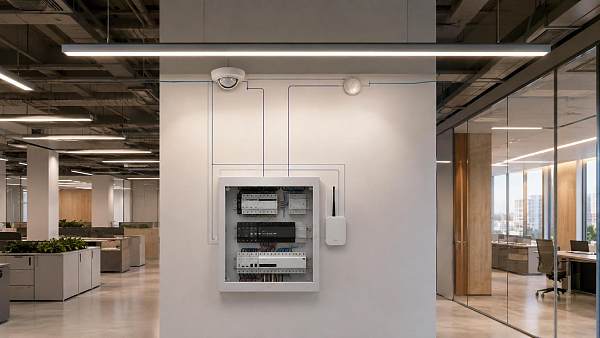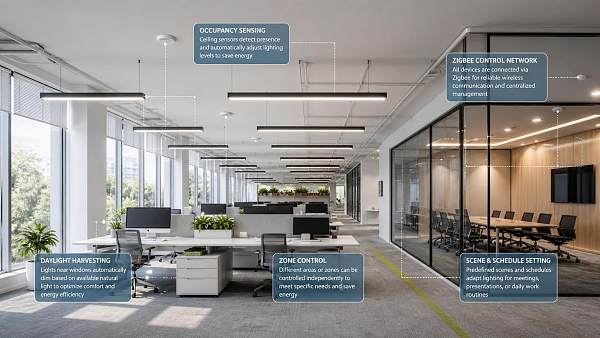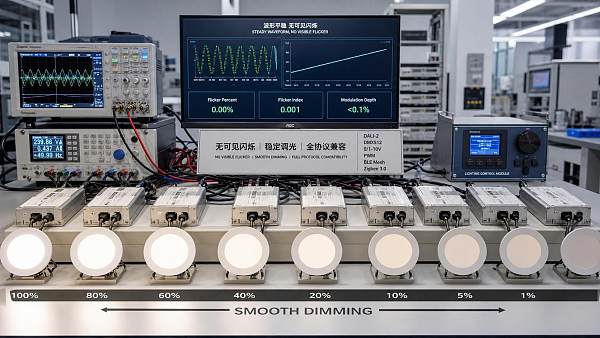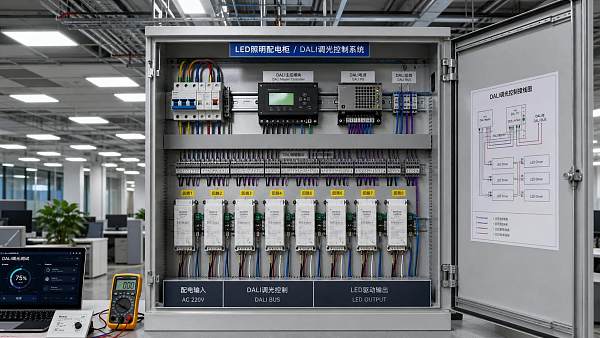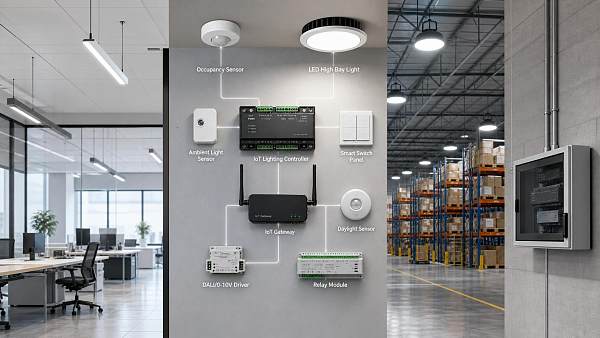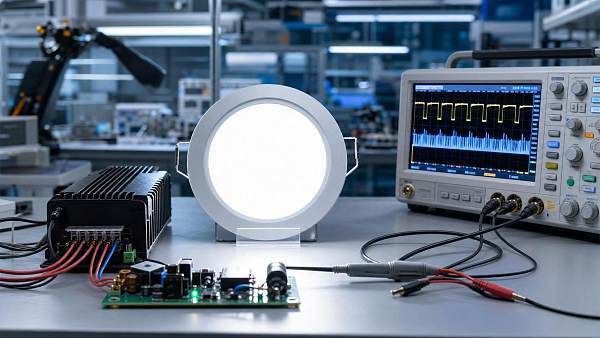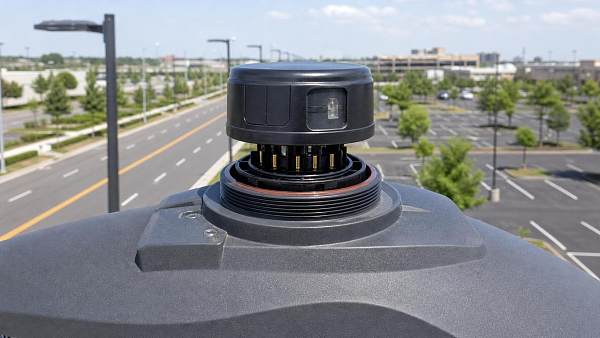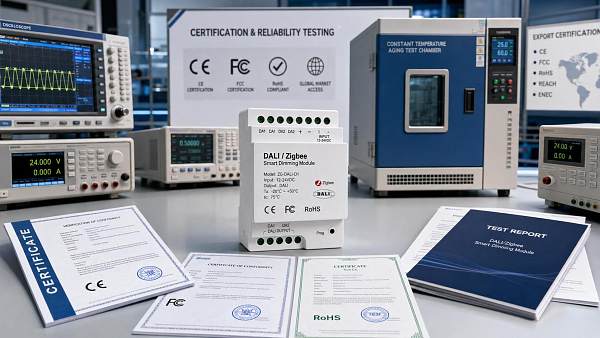
From June 1, 2026, the revised Energy Performance of Buildings Directive (EPBD) in the European Union takes full effect, requiring all newly built commercial buildings to include automatic lighting controls and building automation systems. For lighting manufacturers, control module suppliers, gateway providers, importers, project contractors, and commercial building buyers, this is worth close attention because it shifts smart lighting from an optional efficiency upgrade to a compliance-linked purchasing requirement tied to delivery standards and CE certification pathways.
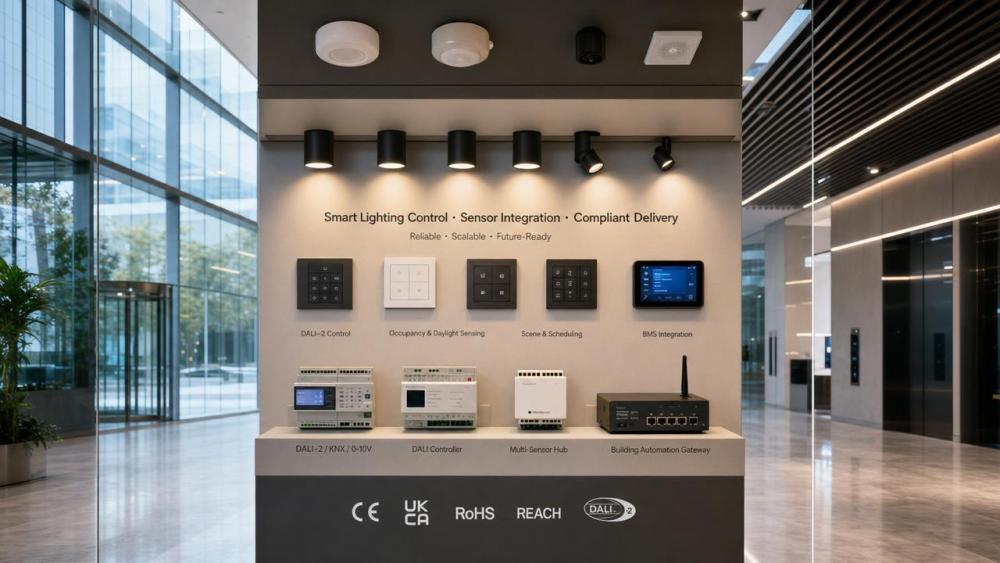
What the rule now requires
The confirmed change is clear: as of June 1, 2026, the revised EPBD is fully implemented in the EU, and all new commercial buildings must be equipped with automatic lighting control systems and building automation systems.
Based on the information provided, the rule directly places DALI and Zigbee smart dimming modules, sensor-integrated luminaires, and Matter-compatible gateways into a mandatory procurement context for relevant projects. The same update is also described as affecting global supply-chain delivery standards and CE certification routes.
Where the impact is likely to be felt first
Component and control-device suppliers
From an industry perspective, suppliers of dimming modules, sensors, gateways, and related control components may be affected first because the regulation changes these products from optional specifications into items more likely to appear in baseline project requirements. The main pressure point is likely to be product readiness for compliant delivery and supporting documentation linked to market access.
Lighting manufacturers and integrators
Manufacturers of commercial lighting products and system integrators may need to pay closer attention to how luminaires, sensors, and automation functions are packaged together in actual project bids and deliveries. What deserves closer attention is whether product portfolios, integration capability, and certification materials are aligned with customer expectations under the new rule.
Importers, distributors, and project buyers
For importers, channel partners, and procurement teams serving commercial building projects, the likely impact is less about product promotion and more about specification matching, supplier qualification, and delivery risk. Observably, changes in required configurations could affect sourcing choices, communication with upstream suppliers, and contract preparation for new commercial building projects in the EU market.
What companies should monitor now
Watch for official wording and implementation details
Analysis shows that businesses should distinguish between the confirmed policy direction and the exact wording used in procurement, compliance, and project execution. Even when the direction is already clear, operational interpretation often depends on how requirements are reflected in tenders, product files, and acceptance criteria.
Review category exposure in current pipelines
Companies with exposure to DALI or Zigbee dimming modules, sensor-integrated lighting products, and Matter-compatible gateways should identify where these categories sit in their order pipeline, export plans, and customer quotations. The practical issue is not only product inclusion, but also whether delivery commitments and specifications still match the regulatory context after June 1, 2026.
Check certification and documentation readiness
Because the provided information specifically points to CE certification pathways, companies should pay attention to the completeness and consistency of technical files, declarations, and product compliance materials tied to the affected product groups. This is especially relevant where multiple suppliers, private-label arrangements, or cross-border deliveries are involved.
Prepare for procurement and customer communication changes
What deserves closer attention is how procurement language may change in commercial building projects. Suppliers and service providers may need clearer communication with customers on product compatibility, system integration scope, lead times, and the supporting documents required for project approval and delivery.
Why this matters beyond a single compliance date
As an editorial observation, this development is more than a short-term policy update for one product category. It suggests that, in new EU commercial buildings, intelligent lighting control is being treated less as an optional building feature and more as part of standard energy-performance compliance infrastructure.
At the same time, it is more appropriate to understand this as a confirmed regulatory direction with ongoing implementation implications, rather than as a fully settled market outcome. The rule is in force, but the exact commercial effects across specifications, certification practice, and supply-chain execution still require continued observation.
How the market is likely to read this signal
The immediate significance of this update lies in compliance-driven demand visibility for smart lighting controls and connected building components in new commercial construction. In a broader industry reading, the stronger signal is that procurement, certification, and delivery expectations are becoming more tightly linked.
For now, the most balanced interpretation is that this is both an effective near-term requirement and a longer-term market signal. It should not be read as an automatic outcome for every supplier, but it does indicate a clearer threshold for what the EU commercial building market may increasingly expect as standard.
Basis of this article and follow-up points
This article is based on the user-provided news title, event date, and event summary. The information available for this piece states that the revised EPBD takes full effect on June 1, 2026, requires automatic lighting controls and building automation systems in all new commercial buildings, and brings specified smart lighting and gateway products into mandatory procurement relevance while affecting delivery standards and CE certification pathways.
For this type of industry update, commonly relevant source categories may include official policy announcements, company disclosures, industry association updates, authoritative media reporting, and standards-related documents. A specific official source link was not provided in the input, so the exact primary-source reference still needs ongoing verification. Follow-up attention should focus on subsequent official wording, procurement practice, certification interpretation, and how these requirements are applied in real project delivery.
Related News
 Does wireless smart lighting control work with existing DALI systems?Wireless smart lighting control can upgrade existing DALI systems with the right gateway. Explore compatibility, commissioning, coverage, and retrofit best practices.
 Can adaptive lighting control for offices reduce energy use without complaints?Adaptive lighting control for offices cuts energy use while protecting comfort. Explore smart zoning, commissioning, and overrides that prevent complaints.
 When does zigbee lighting for offices lower energy costs enough to justify the upgradeZigbee lighting for offices lowers energy costs fastest in spaces with long hours, hybrid occupancy, and costly rewiring. See when savings, flexibility, and ROI justify the upgrade.
 How to Evaluate an LED Drivers Supplier for Dimming StabilityLED drivers supplier selection starts with dimming stability. Learn how to verify flicker, protocol compatibility, thermal reliability, and test data before you buy.
 DALI Dimming Control: Common Wiring Errors and How to Prevent ThemDALI dimming control wiring mistakes can derail commissioning fast. Learn the most common errors, how to prevent flicker, misaddressing, and downtime, and improve lighting reliability.
 IoT Lighting Controls Supplier: Key Cost and Integration Risks to ReviewIoT lighting controls supplier selection goes beyond price. Learn hidden costs, integration risks, cybersecurity concerns, and smart evaluation tips before you commit.
 Office Lighting Controls: How to Reduce Energy Waste FastOffice lighting controls help cut energy waste fast with occupancy sensors, daylight harvesting, and smart scheduling. Learn how offices can lower costs, improve comfort, and prove ROI.
![]() Tunable White Lighting Supplier Checklist for Smarter Project BidsTunable White Lighting supplier checklist for smarter project bids. Compare controls, compliance, dimming, and delivery reliability to reduce risk and choose with confidence.
Tunable White Lighting Supplier Checklist for Smarter Project BidsTunable White Lighting supplier checklist for smarter project bids. Compare controls, compliance, dimming, and delivery reliability to reduce risk and choose with confidence. PWM Dimming Technology: How to Reduce Flicker Without Losing ControlDimming Technology PWM explained: learn how to reduce flicker without losing precise control. Discover causes, smart fixes, and best practices for reliable LED dimming.
 7 Pin NEMA Socket Lighting: Common Compatibility Issues to Check7 pin NEMA socket lighting issues often start with hidden pin, protocol, or sealing mismatches. Learn the key compatibility checks to prevent retrofit failures and costly repeat maintenance.
 DOE Extends Waiver on Thermal Cycling Test for DALI/Zigbee DimmersDOE extends the thermal cycling test waiver for DALI/Zigbee dimmers through June 30, 2027. Learn how the policy shift may speed certification, reduce delays, and impact exports.
 DOE Eases Thermal Cycling Rule for DALI/Zigbee DimmersDOE eases thermal cycling rules for DALI/Zigbee dimmers in 2026. Learn what the temporary U.S. compliance change means for exports, documentation, and smart lighting project delivery.