Why does DALI lighting for hotels fail even when the hardware looks right?
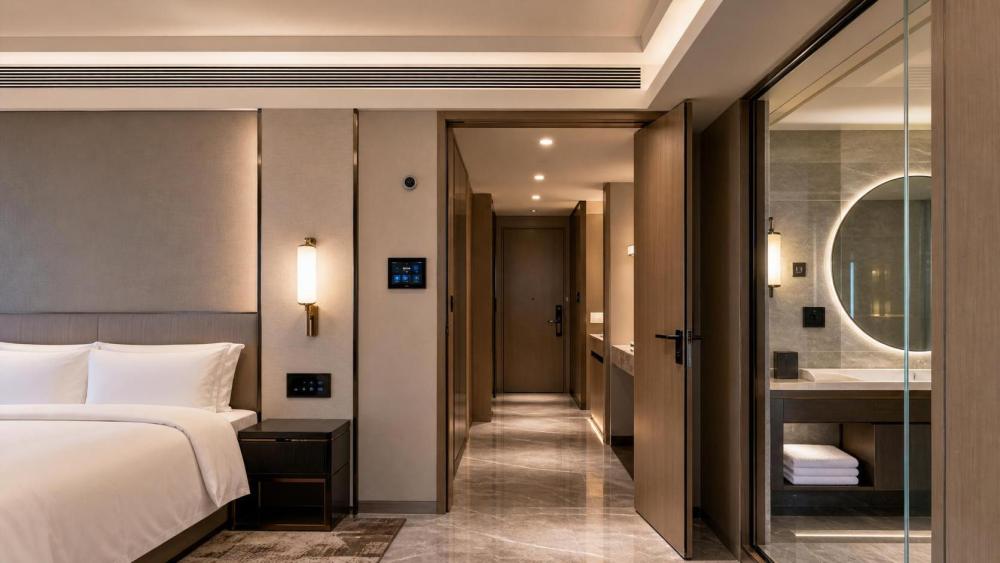
DALI lighting for hotels often fails for one simple reason: control strategy is treated as a late-stage add-on, not an early design decision.
Fixtures may be efficient, drivers may be compliant, and wiring may be neat. Yet the system still behaves poorly once the hotel starts operating.
In real projects, the trouble usually appears during scene testing, guest room handover, or integration with sensors and building systems.
That is why DALI lighting for hotels deserves closer attention before procurement is locked. The control layer affects comfort, maintenance, energy use, and even brand perception.
A hotel is not a generic commercial building. Guest rooms, corridors, banquet halls, spas, lobbies, and back-of-house areas all need different dimming logic.
More importantly, those spaces change by time of day, occupancy level, and service mode. A control plan that works in an office may feel awkward in hospitality.
SILS often tracks this crossover between lighting quality, control protocols, compliance, and operational return. That broader view matters when hotel lighting decisions affect both experience and lifecycle cost.
What is the most common planning mistake in DALI lighting for hotels?
The biggest mistake is defining zones by electrical circuits instead of by use scenario.
DALI lighting for hotels should be grouped around behavior. A bedside reading scene, a nighttime path light, and a housekeeping mode may share fixtures, but they do not share the same control intent.
When teams map addresses too early around wiring convenience, later changes become expensive. Scene revisions then require software workarounds or readdressing.
A better approach is to define the operating logic first. Then align loops, devices, and gateway capacity with that logic.
The following table highlights planning issues that repeatedly delay hotel projects.
In practice, the earlier this logic is documented, the easier commissioning becomes. It also improves communication between lighting designers, controls vendors, and site teams.
Are scene settings and dimming behavior usually underestimated?
Yes, and this is where many polished specifications start to break down.
DALI lighting for hotels is rarely judged by protocol alone. It is judged by how smooth the dimming feels, how consistent scenes look, and how intuitive controls are for staff and guests.
A common mistake is assuming that 1% dimming from one driver behaves the same as 1% from another. It often does not.
Some luminaires show visible stepping at low levels. Others shift color temperature slightly, or fail to start cleanly after deep dimming.
In a hotel guest room, these issues become obvious at night. In a lobby or restaurant, they affect atmosphere and visual comfort.
This is why mock-up testing matters. Not just lux levels, but fade time, minimum dimming threshold, glare control, and scene transitions should be checked in a representative room.
- Test warm ambience scenes at low output, not only full brightness.
- Confirm whether occupancy sensors trigger abrupt changes.
- Review fade speed for nighttime movement and bathroom access.
- Check whether drivers remain flicker-free across the required dimming range.
SILS frequently emphasizes that lighting performance is not just efficacy or wattage. Dimming quality, thermal stability, optics, and driver behavior are closely linked in real applications.
Where do integration problems usually appear in hotel projects?
Integration problems usually appear at system boundaries, not inside the DALI loop itself.
For example, DALI lighting for hotels may need to interact with key card switches, BMS platforms, HVAC logic, shading systems, occupancy sensors, and emergency testing routines.
Each interface looks manageable in isolation. Combined, they can create conflicting triggers.
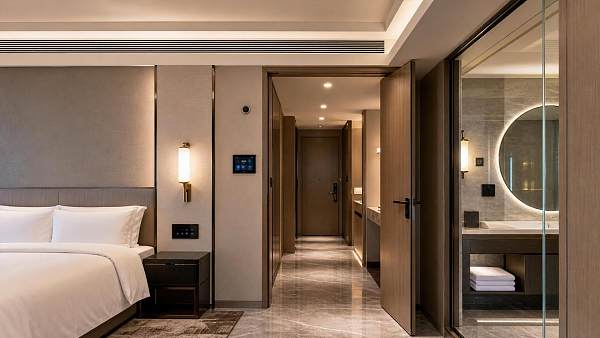
A guest room is a good example. The room may need welcome mode, sleep mode, curtain control, HVAC setback, minibar power logic, and housekeeping override.
If those functions are not prioritized clearly, the result is unpredictable behavior. Lights may switch on after the guest tries to darken the room, or scenes may reset after card removal.
The safer method is to write a control sequence narrative before software commissioning starts. That document should define which command wins when two events happen together.
A practical sequence review should answer these points
- What happens when power returns after an outage?
- Which scenes are local, and which are supervised centrally?
- How do cleaning and maintenance overrides expire?
- What is the fallback state if a sensor or gateway fails?
Those details sound small, but they often decide whether the system feels premium or frustrating.
How can you avoid costly commissioning delays with DALI lighting for hotels?
The fastest way to avoid delays is to treat commissioning as a project stream, not as the final checkbox.
DALI lighting for hotels involves addressing, scene programming, driver checks, control panel logic, and integration testing. If any one of these starts late, handover slips.
A frequent issue is incomplete asset information. Device schedules, room types, luminaire IDs, and final control drawings may not match site reality.
Then the commissioning team spends days identifying fixtures manually. That cost is rarely visible in early budgets, but it shows up during pressure-filled closeout weeks.
A more reliable method is to lock a commissioning package before first fix completion.
- Issue a room-by-room control matrix.
- Match luminaire tags with DALI addresses and driver models.
- Confirm emergency and normal lighting separation.
- Define witness testing steps for scenes, sensors, and fail states.
- Keep one revision owner for software and field changes.
This is also where informed reference content helps. SILS covers DALI systems, flicker-free dimming, compliance, and driver reliability in a way that supports more disciplined decision-making.
What should be checked before approving a DALI hotel lighting scheme?
Approval should go beyond fixture counts and control brand names. The more useful check is whether the scheme can operate reliably under real hotel conditions.
A good review usually combines technical, operational, and maintenance questions.
If several answers are still uncertain, the design is probably not ready for final lock-in. It is better to pause early than rework later.
That is especially true in hospitality, where opening dates are fixed and post-handover disruption is expensive.
So, how do you make DALI lighting for hotels more reliable from day one?
Start with use cases, not just devices. Define how each hotel space should feel, operate, dim, recover, and be maintained.
Then connect that intent to DALI addressing, driver selection, sensor logic, and commissioning workflow.
The strongest DALI lighting for hotels projects usually share three habits: realistic mock-ups, written control sequences, and disciplined revision control.
If the goal is fewer surprises, begin by reviewing scene logic, low-end dimming behavior, integration priorities, and emergency response states before site programming starts.
That kind of structured review turns DALI lighting for hotels from a specification line into a dependable operating system for hospitality spaces.
For the next step, build a short control checklist for each room type, compare it against the commissioning package, and flag any unresolved interfaces before procurement is finalized.
Related News
 Matter 1.4 Becomes a North America Gate for Dimming ModulesMatter 1.4 now reshapes North America access for DALI/Zigbee dimming modules. Learn how Energy Star v2.7 and CSA/UL 62368-1:2026 impact certification, retail listings, and procurement eligibility.
 Office Smart Lighting Automation: How to Compare Control OptionsOffice smart lighting automation explained: compare wired, wireless, and hybrid controls by comfort, interoperability, maintenance, and ROI to choose the best-fit office system.
 Smart Building Automation Lighting: Where Savings StartSmart Building Automation Lighting helps cut energy use, improve comfort, and simplify control. Discover how offices, retail, and public spaces turn lighting upgrades into measurable savings.
 Energy Star v2.7 Makes Matter 1.4 MandatoryEnergy Star v2.7 makes Matter 1.4 mandatory for DALI and Zigbee smart LED drivers by Oct 1, 2026. Learn how this affects certification, safety testing, exports, and project delivery.
 Energy Star v2.7 Makes Matter 1.4 MandatoryEnergy Star v2.7 makes Matter 1.4 mandatory for DALI-2 and Zigbee smart LED drivers by Oct 1, 2026. See how the rule impacts certification, channel access, and buying decisions.
 EU EPBD Rule Takes Effect: Smart Lighting RequiredEU EPBD rule takes effect in 2026, making smart lighting mandatory in new commercial buildings. Learn how DALI-2, Matter 1.4, and KNX affect compliance, sourcing, and EU market access.
 Smart Lighting Systems for Buildings: Key Trends Shaping Retrofit PlansSmart Lighting Systems for buildings are reshaping retrofit plans with better energy savings, interoperability, ESG value, and occupant comfort. Explore the key trends driving smarter upgrades.
 DALI Lighting for Hotels: Common Control Mistakes and How to Avoid ThemDALI lighting for hotels often fails due to poor control planning. Learn the most common mistakes, how to avoid delays, and how to build smoother, smarter hotel lighting systems.
 DOE Updates Energy Star v2.7 for Smart DriversDOE Updates Energy Star v2.7 for Smart Drivers: learn how Matter 1.4 over Thread, startup, and hot-plug rules could affect certification, rebates, and North American market access.
 Wireless Tunable White Lighting: When the Energy Savings Justify the UpgradeWireless tunable white lighting can cut energy waste, simplify retrofits, and improve flexibility. Learn when the savings, controls, and ROI truly justify the upgrade.
 EU EPBD Rule Takes Effect in May for Smart LightingEU EPBD rule takes effect in May for smart lighting, reshaping compliance for new commercial buildings. Learn how DALI, Zigbee, IoT drivers, and automation readiness impact EU market entry.
 Zigbee Lighting System Problems: Common Causes and Practical FixesZigbee lighting system issues often start in the network, not the lamp. Learn common causes, practical fixes, and how to restore stable pairing, scenes, and dimming fast.