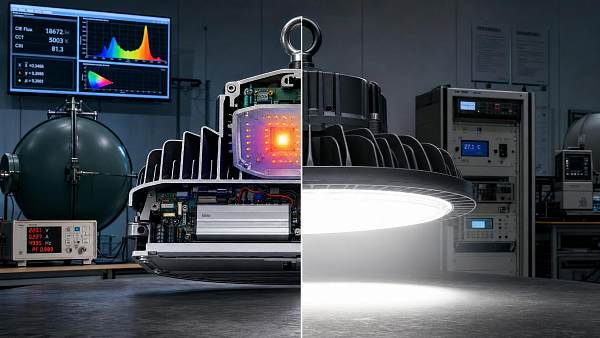
LED Thermal Management and Lumen Maintenance sit at the center of reliable lighting performance. In commercial and industrial projects, light output is not shaped by chip efficacy alone. It is also shaped by heat.
That is why LED lighting thermal management matters well beyond product design. It affects lumen stability, color consistency, driver life, enclosure safety, maintenance cycles, and compliance confidence across demanding operating environments.
Across the sectors tracked by SILS, thermal control is a practical business issue. It influences streetlights, retail luminaires, smart controls, stage fixtures, horticultural systems, and other installations where long operating hours magnify small design weaknesses.
Why thermal behavior directly affects lumen maintenance
An LED does not fail only when it suddenly goes dark. In many projects, the earlier warning sign is lumen depreciation. The fixture still turns on, but the delivered light level falls below what the application requires.
Junction temperature is the key variable. When heat is not removed efficiently, the LED junction runs hotter. Higher junction temperature accelerates phosphor stress, package aging, optical material discoloration, and solder fatigue.
Over time, that thermal stress reduces lumen maintenance. It can also shift chromaticity, especially in tightly specified commercial interiors, façade lighting, and visual merchandising environments.
In simple terms, LED lighting thermal management is the discipline of moving heat away from the light source and related electronics fast enough to preserve stable performance throughout the rated life.
What the industry is watching more closely now
Thermal management is getting more attention because modern luminaires are doing more with less space. Higher efficacy targets, smaller housings, smarter controls, and tighter aesthetics create a tougher thermal balance.
IoT-enabled drivers, wireless nodes, sensors, and dimming interfaces add electronics that generate their own heat. In enclosed fixtures, this can raise internal temperature even when the LED package itself is efficient.
The issue is also wider than indoor lighting. Smart city poles, horticultural luminaires, moving head stage lights, and specialty optical systems operate under very different duty cycles, ambient conditions, and mechanical constraints.
SILS often frames this as a cross-disciplinary problem. Semiconductor packaging, heat sink geometry, airflow, optics, driver design, dimming strategy, and compliance requirements all influence the final thermal outcome.
Where thermal risk tends to increase
- High-power LED arrays in compact housings
- Fixtures with sealed IP-rated enclosures
- Installations exposed to high ambient temperature
- Products using dense driver and control assemblies
- Applications requiring long daily operating hours
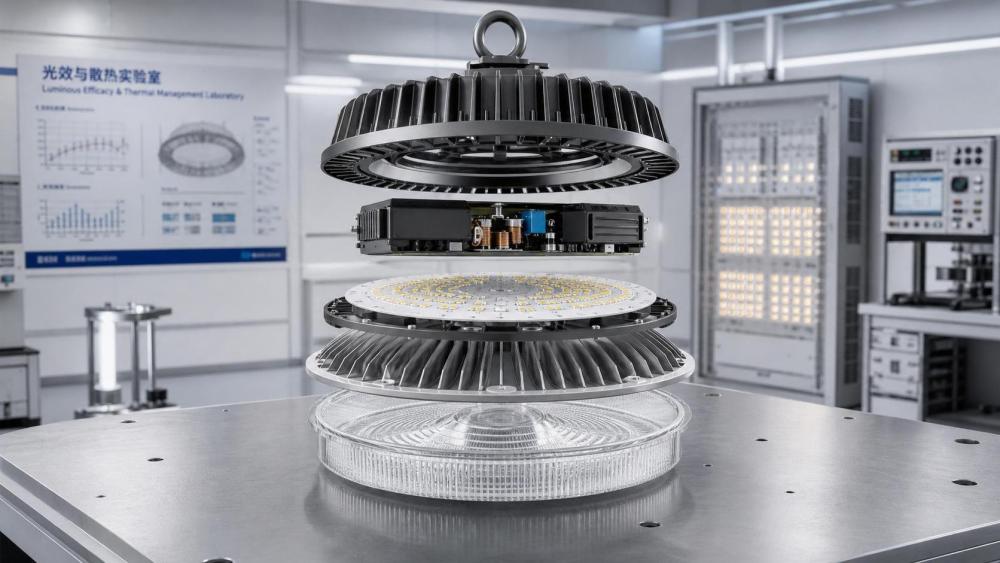
The thermal path is more important than any single component
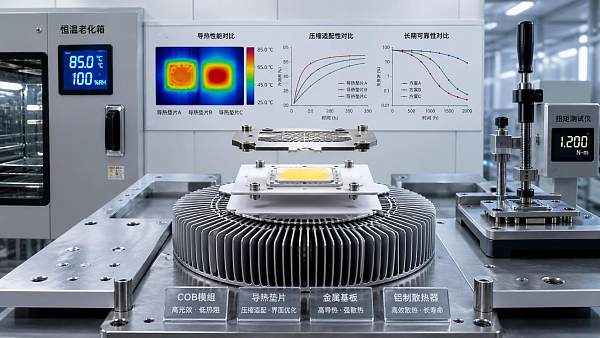
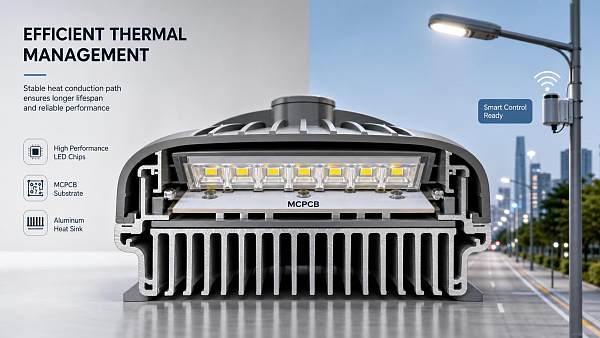
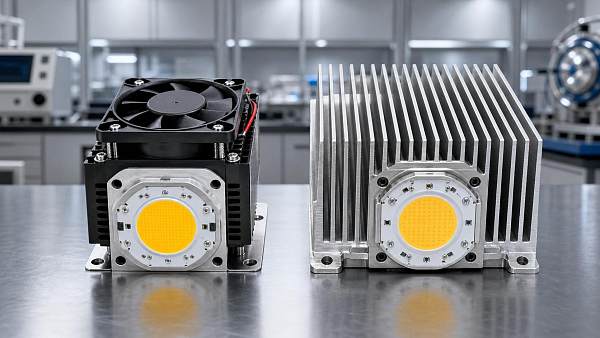
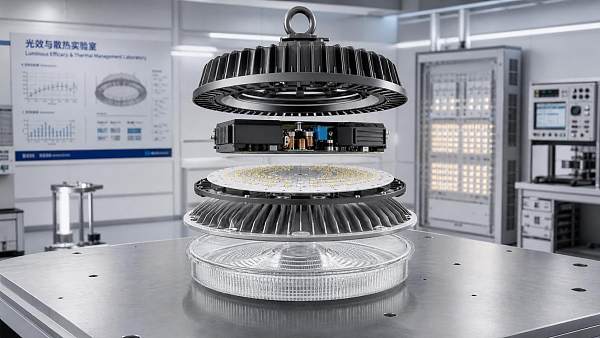
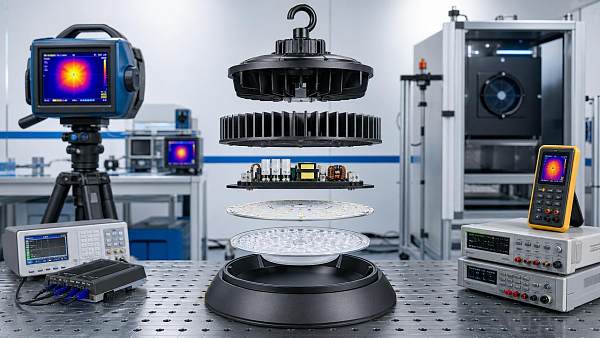
A common mistake is to treat heat sink size as the whole answer. In practice, LED lighting thermal management depends on the complete thermal path from junction to board, housing, and surrounding air.
Weakness at any point raises thermal resistance. A high-quality LED package cannot compensate for poor MCPCB layout, inadequate thermal interface material, weak casting design, or blocked airflow inside the luminaire.
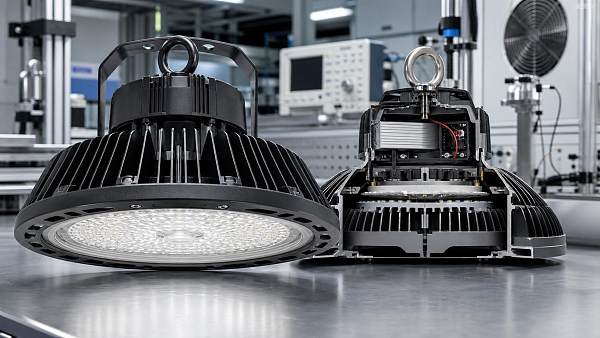
Driver placement matters as well. When driver heat couples into the optical chamber, lumen maintenance and electronics life can both suffer. This becomes critical in linear fixtures, downlights, streetlights, and integrated smart luminaires.
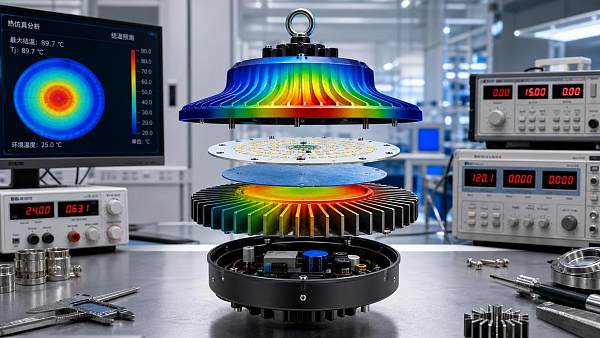
CFD analysis is increasingly useful here. It helps visualize hot spots before tooling decisions are locked, especially in products with unusual optics, sealed compartments, or constrained mounting positions.
Core elements of a sound thermal path
Application context changes the thermal target
The right thermal strategy depends on where the fixture will work. A retail track light, a municipal streetlight, and a grow light can share LED technology while facing completely different thermal realities.
In street lighting, ambient heat, solar loading, and sealed outdoor housings are major concerns. Lumen maintenance is tied to public safety, energy contracts, and maintenance scheduling.
In horticultural systems, long photoperiods and dense installation layouts increase cumulative heat. Thermal stress can lower photon output stability, which directly affects crop planning and room uniformity.
Stage lighting adds another layer. High-output LED engines, motion systems, and compact optics create intense internal heat. Thermal design must support both optical consistency and electrical protection during extended shows.
For smart commercial buildings, the challenge is often mixed loading. DALI or wireless control modules, sensors, and tunable white drivers need stable operation without compromising glare control, aesthetics, or fixture size.
How to judge thermal performance in real projects
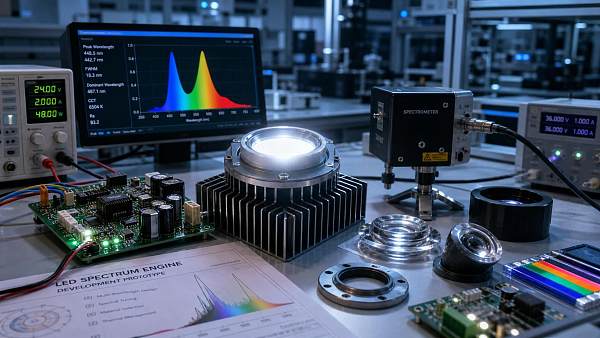
Published efficacy figures are useful, but they do not replace thermal evidence. Reliable evaluation needs operating data, test conditions, and a clear link between laboratory claims and field conditions.
Start with junction temperature assumptions and ambient temperature limits. Then look at lumen maintenance claims such as L70 or L90 in context. The rated life is only meaningful if the thermal environment matches the test basis.
Driver reliability should be reviewed alongside LED performance. Electrolytic capacitor stress, derating curves, and enclosure temperature can define service life as much as the LED package itself.
Compliance also matters. Thermal control supports safer operation, lower surface temperature risk, and more dependable long-term performance under programs and standards connected to lighting quality and energy claims.
Useful review points during comparison
- Measured Tc point and test method
- Ambient temperature range for rated performance
- Lumen maintenance data source and duration
- Driver thermal derating behavior
- Evidence of CFD or thermal validation
- Material aging risk in optics, seals, and housings
Why this matters for quality and safety decisions
Poor LED lighting thermal management rarely stays isolated to one metric. It can trigger output loss, color drift, premature driver replacement, cracked solder joints, lens yellowing, and inconsistent field performance between batches.
That creates a wider operational problem. Replacement cycles become harder to predict, warranty exposure increases, and documented product consistency becomes more difficult to defend.
For projects with public exposure or regulated performance expectations, thermal weakness can also undermine confidence in compliance readiness. This is especially relevant in infrastructure lighting, export programs, and specification-driven commercial projects.
A more disciplined review of thermal design therefore supports both reliability and governance. It gives a clearer basis for approving fixtures, comparing suppliers, and setting realistic maintenance expectations.
A practical next step for stronger evaluation
The most useful next move is to build a thermal review framework that connects product data, application conditions, and lifecycle targets. That keeps LED lighting thermal management tied to real operating risk rather than brochure language.
In practice, that means checking thermal path design, driver separation, rated ambient limits, lumen maintenance evidence, and enclosure conditions as one system. Isolated metrics can look acceptable while the overall thermal balance remains weak.
SILS is useful in this stage because it places thermal design within a broader lighting context. Streetlight controls, high-CRI fixtures, grow lights, smart drivers, and compliance topics all intersect with the same basic heat management discipline.
When evaluation starts from thermal reality, decisions around reliability, safety, and lifecycle value become much easier to defend. That is the point where lumen maintenance stops being a claim and becomes a measurable operating outcome.
Related News
 How to Compare LED Thermal Management Materials by Conductivity, Compression, and Long-Term ReliabilityLED thermal management materials compared the right way: conductivity, compression, and long-term reliability. Learn how to choose stable, high-performance options for demanding LED systems.
 LED Thermal Management: How to Cut Junction Temperature and Extend LifespanLED thermal management is key to lower junction temperature, protect lumen output, and extend fixture lifespan. Learn practical design factors to compare reliable LED solutions.
 LED Thermal Simulation: How to Predict Junction Temperature EarlyLED Thermal Simulation helps predict junction temperature before prototypes, reducing thermal risk, improving reliability, and guiding smarter LED design decisions early.
 Phosphor Conversion Technology High CRI: Heat, Color Stability, and Output Trade-offsPhosphor Conversion Technology high CRI explained: compare heat, color stability, lumen output, and real LED trade-offs to choose better lighting solutions.
 Active LED Cooling vs Passive Cooling: Which Performs Better?Active LED cooling vs passive cooling: discover which delivers better thermal performance, reliability, and efficiency for high-power lighting before you choose.
 Spectral Engineering Cost: What Drives Budget Up in LED Product DevelopmentSpectral engineering cost explained: discover what raises LED development budgets, from spectral targets and materials to testing, compliance, and ROI-focused design decisions.
 LED Thermal Management and Lumen MaintenanceLED lighting thermal management is key to lumen maintenance, color stability, and fixture life. Learn how better thermal design improves safety, reliability, and long-term lighting performance.
 LED Thermal Management Cost: Where the Real Lifetime Savings Come FromLED thermal management cost shapes lifetime savings more than upfront price. Learn how better thermal design reduces failures, maintenance, and warranty risk while improving long-term ROI.
 Blue Laser Diodes: Thermal Limits, Beam Stability, and Design Trade-offsBlue laser diodes demand more than high output. Explore thermal limits, beam stability, and key design trade-offs to build safer, longer-lasting, high-performance optical systems.
 Laser Diode Supplier Checklist: Thermal Stability, Binning, and Lead TimeLaser diode supplier checklist for buyers: compare thermal stability, wavelength binning, and lead time to reduce risk, improve reliability, and choose a partner with confidence.
 LED Junction Temperature Analysis: How Heat Affects Lifespan and Lumen OutputLED junction temperature analysis reveals how heat impacts lumen output, color stability, and lifespan. Learn what to review before choosing reliable LED lighting solutions.
 Lighting Thermal Service: When Heat Management Becomes a Failure RiskLighting thermal service reveals when heat shifts from efficiency loss to failure risk. Learn how to protect LED reliability, driver life, and long-term project performance.