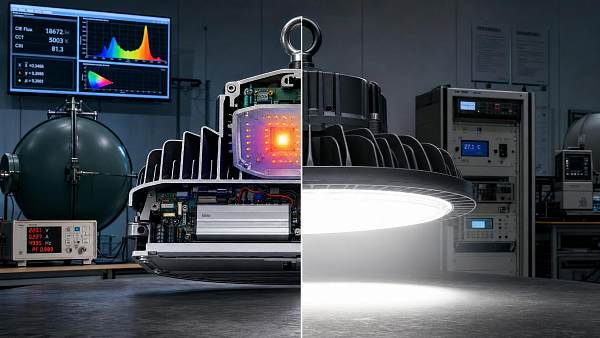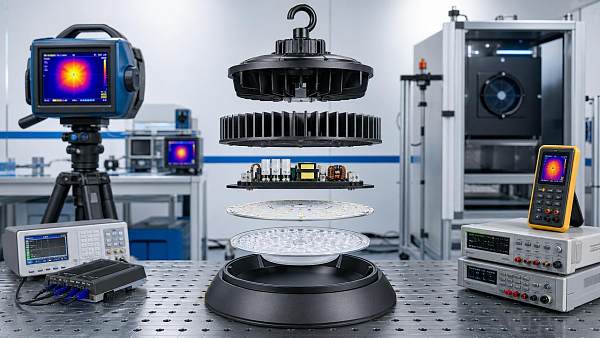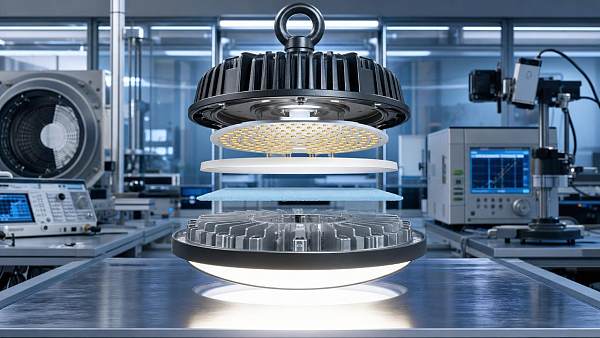
Lighting Thermal Service: When Heat Management Becomes a Failure Risk
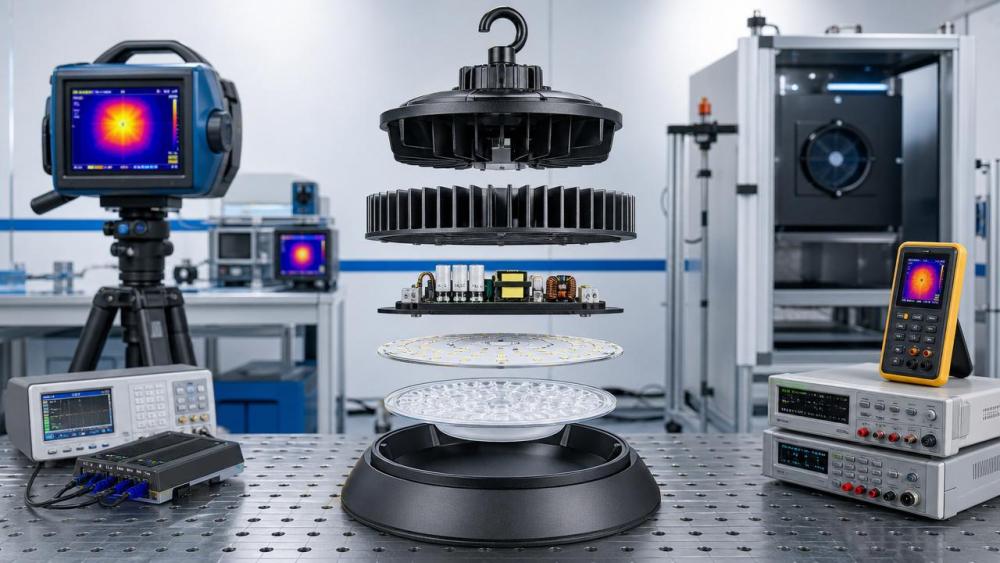
Lighting thermal service becomes critical when LED systems move beyond normal operating heat and enter a zone of measurable reliability loss.
At that point, thermal design is no longer only an engineering preference. It becomes a failure risk, a compliance risk, and a cost risk.
This matters in commercial LEDs, smart streetlights, retail lighting, grow lights, and connected building systems.
In practical terms, lighting thermal service helps determine whether a product can keep junction temperature, driver temperature, and optical stability within safe limits.
Once heat rises too far, the warning signs show up quickly. Light output falls. Color shifts. Driver life shortens. Failures become harder to predict.
For technical approval work, that shift is the real decision point. A fixture may still turn on, yet already be moving toward unstable field performance.
That is why lighting thermal service should be reviewed early, especially when projects expect long operating hours, enclosed mounting, dimming, sensors, or harsh outdoor exposure.
Why Heat Is More Than an Efficiency Problem
Many teams first notice heat through efficacy loss. That is important, but it is only part of the picture.
The deeper concern is that excess heat changes several failure mechanisms at the same time.
- Higher LED junction temperature speeds lumen depreciation.
- Driver capacitors age faster under sustained thermal stress.
- Optical plastics may yellow or deform.
- Solder joints face repeated expansion and contraction.
- Wireless control nodes may lose stability in sealed housings.
This is why lighting thermal service is closely tied to reliability engineering, not just energy performance.
A product that performs well in a short lab demonstration may behave very differently after months of thermal cycling.
From recent market changes, the issue is even clearer in compact luminaires.
Designers now pack LEDs, drivers, sensors, communication modules, and optics into smaller volumes. Heat density rises, but service expectations stay high.
When Lighting Thermal Service Becomes a Failure Trigger
The most useful question is not whether a lamp gets hot. Almost every high-output LED system does.
The better question is when heat crosses from acceptable operation into measurable failure probability.
Lighting thermal service should move to the front of the review process under the following conditions.
1. High ambient temperature
Streetlights in hot climates, warehouse fixtures near roofs, and grow lights in humid rooms often start with little thermal margin.
If the ambient temperature is already high, internal heat has nowhere to go.
2. Sealed or compact enclosures
IP-rated fixtures, architectural downlights, and smart poles often prioritize appearance or weather resistance over airflow.
That makes lighting thermal service essential for understanding trapped heat and component interaction.
3. High drive current or overdriven output
A system may hit attractive lumen targets by pushing current harder.
However, increased current usually raises junction temperature and compresses useful lifetime.
4. Sensitive color or optical requirements
Retail lighting, museum lighting, and high-CRI installations cannot tolerate visible color drift.
Thermal instability affects phosphor behavior, spectral output, and beam consistency.
5. Integrated controls and communication nodes
DALI drivers, Zigbee modules, NEMA nodes, and sensor packages add functional value, but also add heat sensitivity.
In these products, lighting thermal service supports both light engine reliability and control stability.
The Main Failure Modes Linked to Poor Thermal Management
A good thermal review should connect temperature data to real failure outcomes.
That link makes lighting thermal service useful during qualification and supplier comparison.
More importantly, these failures do not always appear at the same time.
A fixture may pass initial function checks while already losing lifetime margin internally. That delay often makes root cause analysis more expensive later.
How to Evaluate Lighting Thermal Service Properly
A strong review should go beyond marketing claims such as advanced heat dissipation or optimized heat sink structure.
Those phrases are common, but they do not prove thermal reliability.
Instead, lighting thermal service should be checked through measurable engineering evidence.
Review the temperature path
Check the complete path from LED junction to board, heat sink, housing, and ambient air.
If one section becomes a bottleneck, the entire system suffers.
Ask for test conditions, not only results
A reported temperature means little without ambient temperature, drive current, mounting condition, and stabilization time.
Lighting thermal service data should be traceable and repeatable.
Compare CFD with physical measurement
CFD modeling is useful, especially during design optimization.
Still, thermal simulation should be supported by thermocouple data or infrared validation on actual products.
Check the driver separately
The light source may appear thermally stable while the driver remains the weak point.
This is common in compact commercial fixtures and outdoor retrofits.
Look at lifetime projection assumptions
L70 claims, driver life claims, and warranty terms should align with real thermal conditions.
If not, the lighting thermal service story is incomplete.
Standards and Technical Signals That Matter
Thermal review also connects to standards, compliance, and procurement confidence.
The exact framework depends on product type, market, and application.
Even so, several technical signals are widely relevant.
- TM-21 and LM-80 support lumen maintenance interpretation.
- Driver temperature rating helps assess electronic lifetime risk.
- IEC-related safety reviews may reveal enclosure and component stress issues.
- DLC or Energy Star expectations often push better thermal consistency.
- Recorded case temperature points improve field comparison across suppliers.
In real projects, the strongest signal is consistency between claimed performance, measured temperature, and expected operating environment.
When those three do not match, lighting thermal service deserves closer scrutiny.
Application Scenarios Where Thermal Risk Escalates Fast
Some sectors face higher thermal failure risk because operating conditions remain demanding for long periods.
- Smart streetlights with sensors, nodes, and sealed housings.
- Horticultural lighting with long photoperiods and humid environments.
- Retail and museum lighting with strict color stability requirements.
- Industrial high bays operating under high ceilings and heat buildup.
- Stage lighting with intense output, compact optics, and duty-cycle spikes.
In each case, lighting thermal service supports better product screening and reduces the gap between brochure claims and field behavior.
That also means fewer maintenance surprises, fewer replacements, and better lifecycle economics.
A Practical Decision Framework
To make lighting thermal service actionable, use a simple decision sequence during technical review.
- Define the actual ambient temperature and operating hours.
- Identify the hottest components, not only the LEDs.
- Check whether test conditions match installation conditions.
- Review lumen maintenance and driver life together.
- Flag sealed designs, high current, and integrated controls.
- Request corrective design evidence where thermal margin looks thin.
This approach keeps lighting thermal service tied to project risk, not abstract theory.
It also helps compare suppliers more fairly, especially when products appear similar on paper.
Final Takeaway
Lighting thermal service matters most when heat begins to affect reliability, optical quality, driver stability, and long-term cost at the same time.
That is the point where thermal management stops being a design detail and becomes a failure risk.
For stronger project decisions, focus on measured thermal paths, realistic test conditions, and lifetime claims that match actual use.
When lighting thermal service is reviewed with that discipline, product selection becomes clearer, warranties become more meaningful, and field performance becomes easier to trust.
Related News
 LED Junction Temperature Analysis: How Heat Affects Lifespan and Lumen OutputLED junction temperature analysis reveals how heat impacts lumen output, color stability, and lifespan. Learn what to review before choosing reliable LED lighting solutions.
 Lighting Thermal Service: When Heat Management Becomes a Failure RiskLighting thermal service reveals when heat shifts from efficiency loss to failure risk. Learn how to protect LED reliability, driver life, and long-term project performance.
 LED Thermal Management Explained: How Heat Affects Lifetime, Color Stability, and Lumen OutputLED thermal management explained: discover how heat impacts LED lifetime, color stability, and lumen output—and how smarter thermal design protects performance, reliability, and ROI.