Why Matter smart lighting is getting serious attention
A Matter smart lighting system is no longer just a consumer convenience topic. It now sits at the intersection of connected controls, energy use, interoperability, and long-term maintainability.
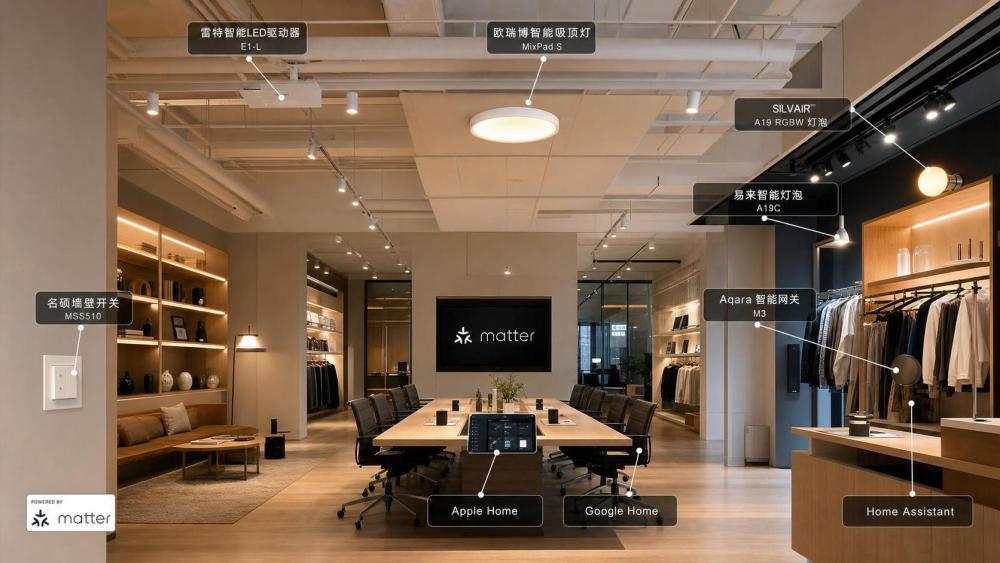
That matters for apartments, offices, hospitality spaces, retail chains, and mixed-use projects where lighting must work across brands and stay manageable after installation.
The appeal is easy to understand. Matter promises faster onboarding, shared device language, and fewer app silos. In daily use, that can mean simpler switching, dimming, scheduling, and scene control.
But setup is not automatically frictionless. A Matter smart lighting system still depends on network quality, device certification, firmware maturity, and practical feature matching between lamps, drivers, controllers, and platforms.
From the broader lighting industry view, this is why the topic has moved beyond smart home discussion. Platforms such as SILS track Matter-compatible smart lighting alongside DALI systems, Zigbee controls, IoT LED drivers, flicker-free dimming, and compliance questions because buyers increasingly compare ecosystems, not isolated products.
What a Matter smart lighting system actually includes
At a basic level, a Matter smart lighting system is a lighting control environment built around the Matter application standard. It helps devices from different certified brands communicate in a more unified way.
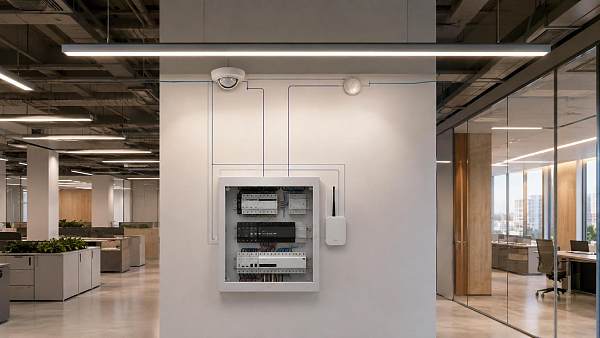
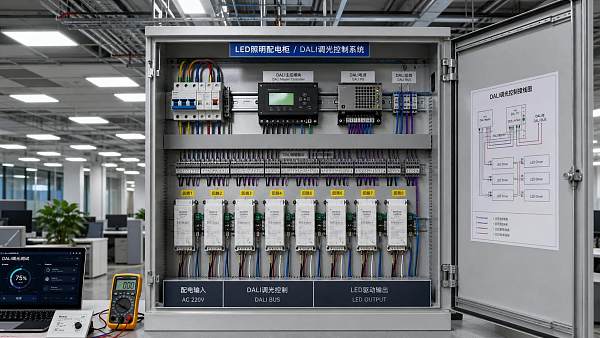
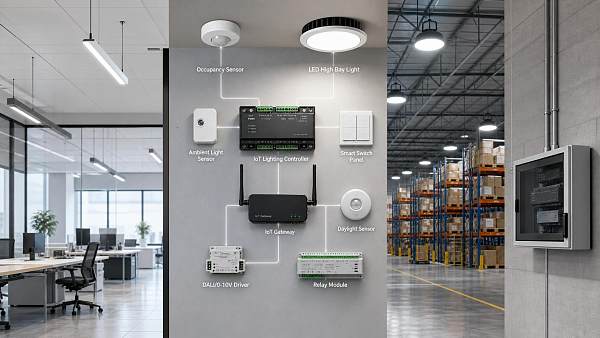
In practice, the system may include smart bulbs, smart switches, gateways, border routers, mobile apps, voice assistants, occupancy sensors, and connected LED drivers.
Some installations are simple room upgrades. Others are layered control projects where the visible luminaire is only one part of the architecture.
This distinction is important. A Matter smart lighting system can improve interoperability at the application layer, but it does not erase the physical realities of dimming curves, driver compatibility, load behavior, thermal design, or optical quality.
That is why lighting decisions should still consider CRI, glare control, flicker performance, driver stability, and lifecycle reliability, especially in commercial settings.
How setup usually works in the field
Most installations follow a familiar pattern, even when brands differ. The process looks easy on packaging, but the real experience depends on preparation.
Typical setup sequence
- Confirm that each lamp, switch, or controller carries valid Matter support.
- Check whether the network needs Wi-Fi, Thread, Ethernet, or a border router.
- Power the device and scan the setup code with a compatible control platform.
- Assign rooms, names, and behavior logic such as scenes or schedules.
- Update firmware before scaling to more devices.
Usually, the first few devices reveal whether the project will be smooth. If pairing takes too long, drops offline, or exposes inconsistent features, larger deployment often becomes harder rather than easier.
For retrofit spaces, setup can also be limited by old wiring, incompatible dimmers, crowded wireless environments, or luminaires using drivers not designed for advanced digital control.
Where the real limits appear
The phrase cross-brand compatibility sounds broad, but a Matter smart lighting system still has boundaries. Those limits appear less in basic on and off control, and more in advanced behavior.
Common operating constraints
A second limit is expectation mismatch. Matter improves interoperability, but it does not mean every certified device exposes identical capabilities inside every ecosystem.
A third limit is lighting quality itself. Even if onboarding is clean, poor dimming smoothness, visible flicker, color inconsistency, or thermal stress can still weaken the overall experience.
Why this matters beyond residential control
A Matter smart lighting system is often discussed in homes, yet its relevance is broader. Commercial and semi-commercial environments increasingly want easier control without being trapped inside one vendor stack.
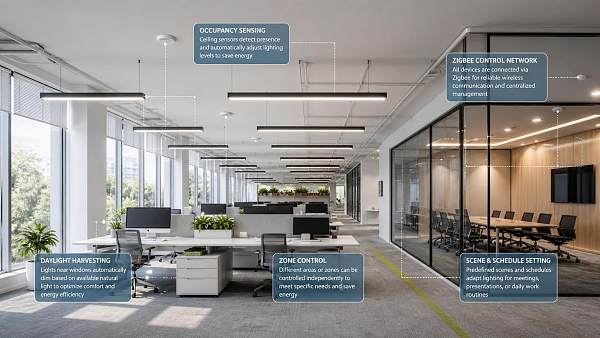
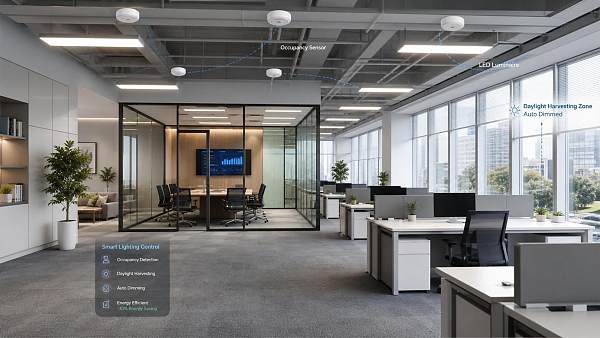
In hospitality, quick room resets and simple scene control are attractive. In retail, schedule consistency and display tuning matter. In offices, occupancy logic and comfort are more important than novelty.
This is also where SILS-style industry analysis becomes useful. Smart lighting should not be judged by protocol language alone. It should be read together with driver reliability, anti-glare optics, energy ROI, compliance readiness, and long-term serviceability.
That broader view helps explain why some projects still prefer DALI or hybrid architectures for deeper building control, even while adding Matter at the user-facing layer.
Practical scenarios and fit
Not every site needs the same architecture. The right fit depends on control depth, scale, and the cost of future changes.
Where a Matter smart lighting system fits well
- Small offices needing cross-brand lamps and simple scheduling.
- Apartments and residential towers with familiar mobile control.
- Retail areas where scene changes are frequent but not deeply customized.
- Retrofit projects that need manageable upgrades without full rewiring.
Where caution is needed
- Large campuses with strict centralized supervision requirements.
- Spaces demanding precise circadian tuning or advanced sensor logic.
- Installations using specialty luminaires with nonstandard control behavior.
- Sites where wireless congestion or weak IT support is already a problem.
Simple rooms usually benefit fastest. Complex buildings need a more careful hybrid design strategy.
What to check before choosing a system
A useful evaluation starts with operating reality, not marketing claims. The best questions are often small and specific.
- Will the devices work over the existing network without adding fragile complexity?
- Are dimming, color temperature, and scene behavior consistent across brands?
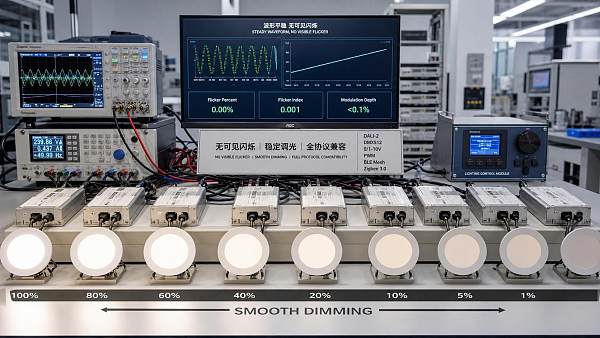
- Does the driver support flicker-free performance at low dimming levels?
- Can firmware updates be managed without disrupting normal operation?
- Is there a fallback control method if the app or cloud layer fails?
- Will replacement products remain available and certified over time?
These checks help separate a usable Matter smart lighting system from one that looks flexible on paper but becomes difficult in operation.
A balanced next step
The strongest value of a Matter smart lighting system is not universal perfection. It is practical simplification where interoperability, user control, and acceptable technical performance meet.
For any planned rollout, it makes sense to map the control goals first, then compare certified devices, driver behavior, network needs, and feature limits under real conditions.
That approach creates a clearer basis for pilot testing, supplier comparison, and longer-term lighting decisions. In most cases, the smartest next move is a small controlled trial before wider adoption.
Related News
 When does DALI building lighting automation reduce operating costs?DALI building lighting automation cuts operating costs through smart scheduling, occupancy sensing, daylight harvesting, and actionable maintenance diagnostics.
 Does wireless smart lighting control work with existing DALI systems?Wireless smart lighting control can upgrade existing DALI systems with the right gateway. Explore compatibility, commissioning, coverage, and retrofit best practices.
 Can adaptive lighting control for offices reduce energy use without complaints?Adaptive lighting control for offices cuts energy use while protecting comfort. Explore smart zoning, commissioning, and overrides that prevent complaints.
 When does zigbee lighting for offices lower energy costs enough to justify the upgradeZigbee lighting for offices lowers energy costs fastest in spaces with long hours, hybrid occupancy, and costly rewiring. See when savings, flexibility, and ROI justify the upgrade.
 How to Evaluate an LED Drivers Supplier for Dimming StabilityLED drivers supplier selection starts with dimming stability. Learn how to verify flicker, protocol compatibility, thermal reliability, and test data before you buy.
 DALI Dimming Control: Common Wiring Errors and How to Prevent ThemDALI dimming control wiring mistakes can derail commissioning fast. Learn the most common errors, how to prevent flicker, misaddressing, and downtime, and improve lighting reliability.
 IoT Lighting Controls Supplier: Key Cost and Integration Risks to ReviewIoT lighting controls supplier selection goes beyond price. Learn hidden costs, integration risks, cybersecurity concerns, and smart evaluation tips before you commit.
 Office Lighting Controls: How to Reduce Energy Waste FastOffice lighting controls help cut energy waste fast with occupancy sensors, daylight harvesting, and smart scheduling. Learn how offices can lower costs, improve comfort, and prove ROI.
![]() Tunable White Lighting Supplier Checklist for Smarter Project BidsTunable White Lighting supplier checklist for smarter project bids. Compare controls, compliance, dimming, and delivery reliability to reduce risk and choose with confidence.
Tunable White Lighting Supplier Checklist for Smarter Project BidsTunable White Lighting supplier checklist for smarter project bids. Compare controls, compliance, dimming, and delivery reliability to reduce risk and choose with confidence. PWM Dimming Technology: How to Reduce Flicker Without Losing ControlDimming Technology PWM explained: learn how to reduce flicker without losing precise control. Discover causes, smart fixes, and best practices for reliable LED dimming.
 7 Pin NEMA Socket Lighting: Common Compatibility Issues to Check7 pin NEMA socket lighting issues often start with hidden pin, protocol, or sealing mismatches. Learn the key compatibility checks to prevent retrofit failures and costly repeat maintenance.
 DOE Extends Waiver on Thermal Cycling Test for DALI/Zigbee DimmersDOE extends the thermal cycling test waiver for DALI/Zigbee dimmers through June 30, 2027. Learn how the policy shift may speed certification, reduce delays, and impact exports.