How Lighting ESCO Contracts Lower Project Risk
Lighting ESCO contractors help businesses modernize illumination with less upfront capital and lower delivery risk. By tying project costs to verified energy savings, they align performance, compliance, and ROI in a way that appeals to decision-makers. This article explains how ESCO-led lighting upgrades reduce technical, financial, and operational uncertainty while improving efficiency, control, and long-term value.
Why Lighting ESCO Contractors Change the Risk Equation
A traditional lighting retrofit often starts with a capital request, a long approval cycle, and a lot of uncertainty. Lighting ESCO contractors change that structure. They package design, procurement, installation, commissioning, and savings verification into one performance-based model.
That matters because the buyer is not only purchasing luminaires or controls. The buyer is purchasing outcomes such as lower energy use, fewer maintenance calls, and more predictable operating costs. In commercial lighting, that shift reduces exposure to scope creep and weak project execution.
From a procurement perspective, the contract itself becomes a risk-control tool. If the savings are measurable, the project can be evaluated on real results instead of vendor promises. That is especially useful for enterprises managing multiple sites, aging fixtures, and mixed control platforms.
Technical Risk: Better Design, Better Outcomes
Technical failure is one of the biggest hidden costs in lighting upgrades. Poor photometric planning can leave aisles too dim, workstations too bright, or exterior areas unevenly lit. Lighting ESCO contractors lower that risk by starting with a structured audit, light-level calculation, and application-based design.
In practice, that means they look at beam angle, glare control, color rendering, thermal management, and dimming compatibility before anyone signs off. For offices, retail, logistics, and municipal sites, those details decide whether the system feels polished or problematic.
A stronger ESCO proposal also helps teams compare options more clearly. Instead of only comparing fixture prices, buyers can compare lumen maintenance, driver reliability, control strategy, and expected lifecycle performance. That is a safer basis for sourcing.
Financial Risk: Pay for Verified Savings
One reason lighting ESCO contractors are attractive in procurement is the financing structure. Many projects can be funded through energy savings, which reduces the need for large upfront spending. That improves budget flexibility and preserves capital for core operations.
The real advantage is predictability. When savings are measured against a baseline, the business can estimate payback with far more confidence. This is helpful for CFOs, facility leaders, and sustainability teams that need a practical case, not just an energy story.
Lighting ESCO contractors also reduce change-order risk. Because scope, delivery milestones, and performance targets are defined early, there is less room for surprise costs. In large portfolios, that consistency often matters more than a slightly lower unit price.
Operational Risk: Keep Business Running During Retrofit
Operational disruption is easy to underestimate. A lighting upgrade can affect store hours, warehouse throughput, tenant comfort, or production schedules. Lighting ESCO contractors lower that risk by sequencing work around business operations instead of forcing operations to adapt to the project.
This is where staging, after-hours installation, and clear cutover planning matter. A good ESCO team will map affected zones, confirm access windows, and define contingency steps before installation starts. That discipline protects service continuity.
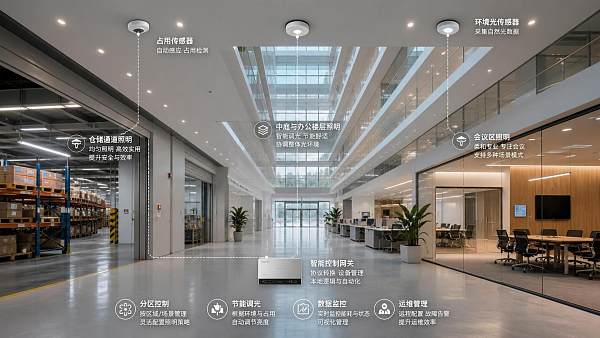
In smart lighting projects, controls add another layer. DALI, Zigbee, Matter-compatible systems, and sensor-based automation can all improve efficiency, but only if commissioning is done correctly. ESCO-led delivery reduces the chance that advanced controls become unused features.
Compliance and Performance: Reduce Surprises After Handover
Compliance risk is another reason organizations choose lighting ESCO contractors. Commercial lighting now touches energy codes, safety standards, light pollution rules, and product certifications. A project that ignores those requirements can create expensive rework later.
ESCo-led teams usually manage specification alignment more carefully. They check driver compatibility, thermal limits, flicker performance, and emergency lighting requirements before deployment. That approach helps avoid situations where a fixture looks good on paper but fails in the field.
For organizations with sustainability reporting goals, the verification layer is equally important. Measured reductions in kWh, peak demand, and maintenance labor create evidence that can support ESG reporting and internal governance reviews.
What to Evaluate Before Signing
Not every proposal is equally strong. Before selecting lighting ESCO contractors, it helps to review a few practical points:
- Baseline quality: confirm how existing energy use and operating hours are measured.
- Savings method: ask how verification will be done and how disputes are handled.
- Equipment scope: review fixture specs, controls, warranties, and replacement terms.
- Installation plan: check phasing, downtime windows, and site safety coordination.
- Post-install support: confirm commissioning, training, and ongoing performance checks.
These questions keep the conversation grounded in execution. They also make it easier to compare multiple lighting ESCO contractors without getting lost in glossy presentations or vague savings claims.
Where the Best Value Shows Up
The strongest projects usually combine LED retrofit, smart controls, and disciplined commissioning. That combination lowers energy use, improves visibility, and creates a cleaner operating environment. It also gives the buyer more confidence in long-term asset performance.
In real business settings, the value is often broader than electricity savings. Better lighting can support tenant satisfaction, employee comfort, merchandise presentation, security, and maintenance planning. Lighting ESCO contractors help capture those benefits without making the project feel financially risky.
For facilities with older infrastructure, the ESCO model is especially useful because it can phase upgrades by priority. That reduces disruption while still moving the portfolio toward higher efficiency and lower lifecycle cost.
Final Takeaway
Lighting ESCO contractors lower project risk by replacing guesswork with measured performance. They help organizations control upfront cost, reduce technical errors, manage compliance, and keep operations stable during retrofit work.
If you are evaluating a lighting upgrade, focus on savings verification, delivery plan, and lifecycle support. That is the clearest way to turn a lighting project into a reliable business decision.
Related News
 What drives smart pole project cost in a citywide rollout?Smart pole project cost depends on more than hardware. Explore the civil, power, connectivity, software, and lifecycle factors shaping a reliable citywide rollout budget.
 How to build a municipal lighting retrofit roadmap around lifecycle costMunicipal lighting retrofit roadmap: build a lifecycle-cost plan that lowers energy, maintenance, and controls risk while strengthening ROI, procurement, and budget decisions.
 What drives lighting commissioning cost in smart lighting projectsLighting commissioning cost in smart lighting projects depends on controls complexity, sensors, software, and integration. Learn the biggest cost drivers and how to avoid rework.
 When does connected lighting lower total cost in commercial buildingsConnected Lighting lowers total cost in commercial buildings when it boosts energy savings, maintenance efficiency, and space insight. Learn when the ROI truly works.
 When do smart controls pay off in a municipal lighting retrofit?Municipal lighting retrofit smart controls pay off when dimming, remote monitoring, and lower maintenance deliver measurable ROI. Learn when the added cost becomes a justified investment.
 How to Evaluate a Wireless Lighting Sensor Supplier for Smart Streetlight ROIWireless lighting sensor supplier selection can make or break smart streetlight ROI. Learn how to compare compatibility, support, and total cost to choose the right partner.
 What Drives LED Supply Chain Cost in Large Lighting Projects?LED supply chain cost in large lighting projects goes far beyond fixture price. Discover the hidden drivers, risks, and practical checks that help buyers avoid overruns.
 How to Evaluate a Lighting Design Consulting Company for Project ROILighting Design Consulting company evaluation starts with ROI. Learn how to assess technical depth, controls, compliance, and delivery support before you commit.
 How to Compare an IoT Lighting Management Platform for Smart Streetlight TCOIoT lighting management platform comparison starts with smart streetlight TCO. Learn how to assess interoperability, deployment, connectivity, alarms, and scalability before you buy.
 How Municipal Lighting Energy Contracts Affect Streetlight TCO and PaybackMunicipal lighting energy contracts shape streetlight TCO, risk, and payback. Learn how to compare baselines, financing, maintenance, and savings terms before approving an LED upgrade.
 What Drives Tunable White Lighting Price in Commercial Projects?Tunable White Lighting price depends on controls, drivers, color consistency, installation, and compliance. Learn the real cost factors to compare quotes smarter and avoid hidden commercial project expenses.
 How Municipalities Calculate Lighting ROI Before Upgrading StreetlightsLighting ROI for municipalities starts with data, not guesswork. Learn how cities assess energy, maintenance, controls, and risk before upgrading streetlights.